
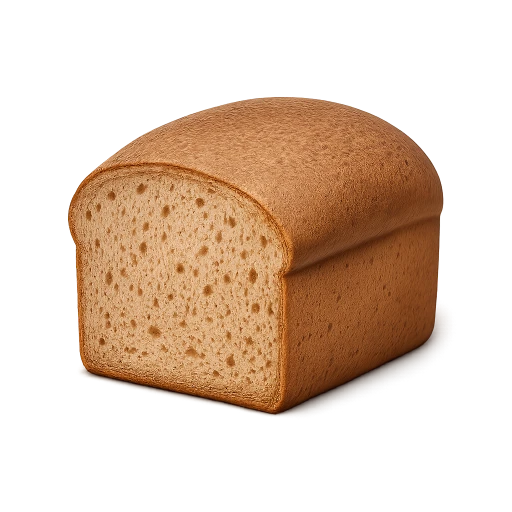
Bread (wholemeal/whole wheat)
Grains · Bread
Not really, and the sandwich is the problem. One slice of wholemeal wheat bread (24 g) already rates amber, and the two slices it takes to make a sandwich come to 0.44 g of fructans and a red rating. The loaf many people switch to for the sake of their gut is the harder one on a low FODMAP diet.
Last updated 3 September 2026Serving sizes for bread (wholemeal/whole wheat)
One slice (24 g) is amber and 2 slices (48 g) rate red. No green serve appears in the data.

Tested serving sizes
| Serving | Amount | Main FODMAP | Rating |
|---|---|---|---|
| 1 slice | 24 g | Fructans 0.22 g | |
| 2 slices | 48 g | Fructans 0.44 g |
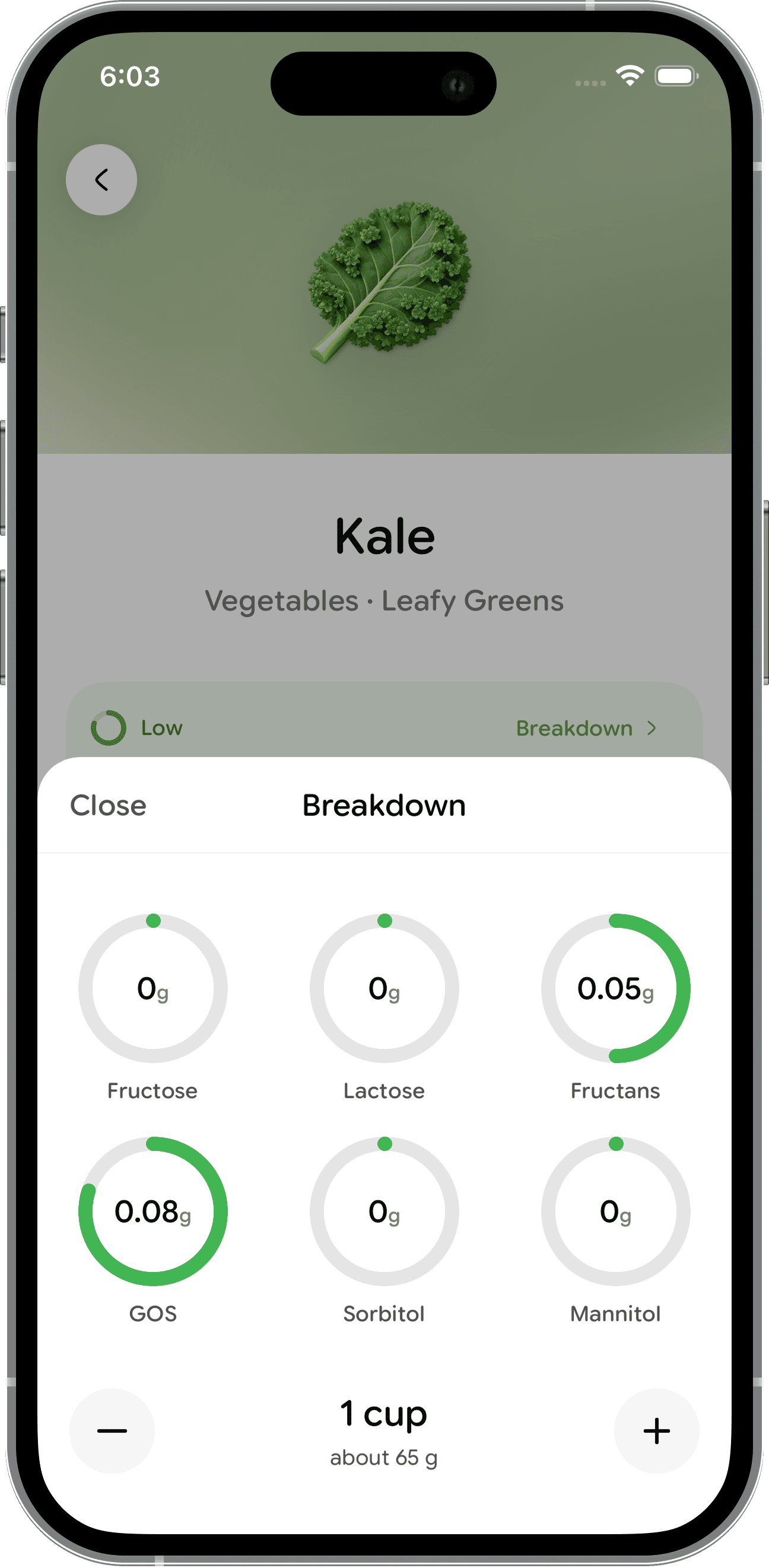
Breakdown for 1 slice
Is bread (wholemeal/whole wheat) low FODMAP?
Fructans do most of the work here, with GOS a smaller second. A single slice carries 0.22 g of fructans, comfortably past the 0.1 g moderate line, and two slices take that to 0.44 g, over the 0.3 g high threshold. The reason sits in the milling: wholemeal flour keeps the bran and germ that white flour discards, and those outer layers of the wheat grain are where fructans are concentrated. The loaf with more fibre per slice is also the loaf with more fructans per slice.
Bread (wholemeal/whole wheat) and IBS: what to know
Amber is not a ban. It marks a moderate serve that plenty of people handle and some do not, and the only way to find out which you are is to try one slice on its own rather than buried in a large meal. What makes this food confusing is that general health advice pulls the other way, and it is not wrong: wheat fibre genuinely helps some people with constipation. It simply arrives in the same slice as the fructans. If toast is your breakfast and a sandwich is your lunch, the day totals a red serve even though no single slice did.
Gut-friendly ways to eat bread (wholemeal/whole wheat)
Sourdough wheat bread is the closest swap and the most useful, because slow fermentation leaves two slices at 0.12 g of fructans and a green rating. Gluten-free bread and sourdough spelt are the other green loaves in the guide. If you would rather stay with wholemeal, cap it at one slice and go open-faced, letting the topping carry the meal: eggs, tinned fish, cheese or peanut butter on a single slice beats two slices of anything.
Frequently asked questions
How much wholemeal bread can I eat with IBS?
Treat one slice as the ceiling rather than the starting point. A 24 g slice is amber, meaning a moderate serve worth testing on yourself, and doubling it lands in the red. If you want bread twice in a day, one amber slice at breakfast and a green option at lunch works better than two wholemeal slices in a single sitting.
What bread can I eat instead of wholemeal?
Wheat sourdough is the most direct substitute, since it is the same grain handled differently and its 2-slice serve is rated green. Gluten-free bread and sourdough spelt are the other green choices listed in the guide. All three let you have an actual sandwich, which is the thing wholemeal cannot do without crossing into a red serve.
Why does wholemeal bread bloat me when it is high in fibre?
Because fibre and fructans are not the same thing, and wholemeal delivers both. Fructans pass through the small intestine undigested, draw water into the bowel and are then fermented by gut bacteria, which produces gas. That happens whether or not the bread is doing your fibre intake any favours, and it is why a slice can feel heavy despite being the healthier-sounding option.
Is wholemeal bread OK during the elimination phase?
It is usually left out. The elimination phase leans on green-rated foods, and wholemeal wheat bread has no green serve in the data, only an amber slice and a red pair. Swapping to a green bread for those weeks and reintroducing wholemeal later tells you far more than eating it cautiously the whole way through.
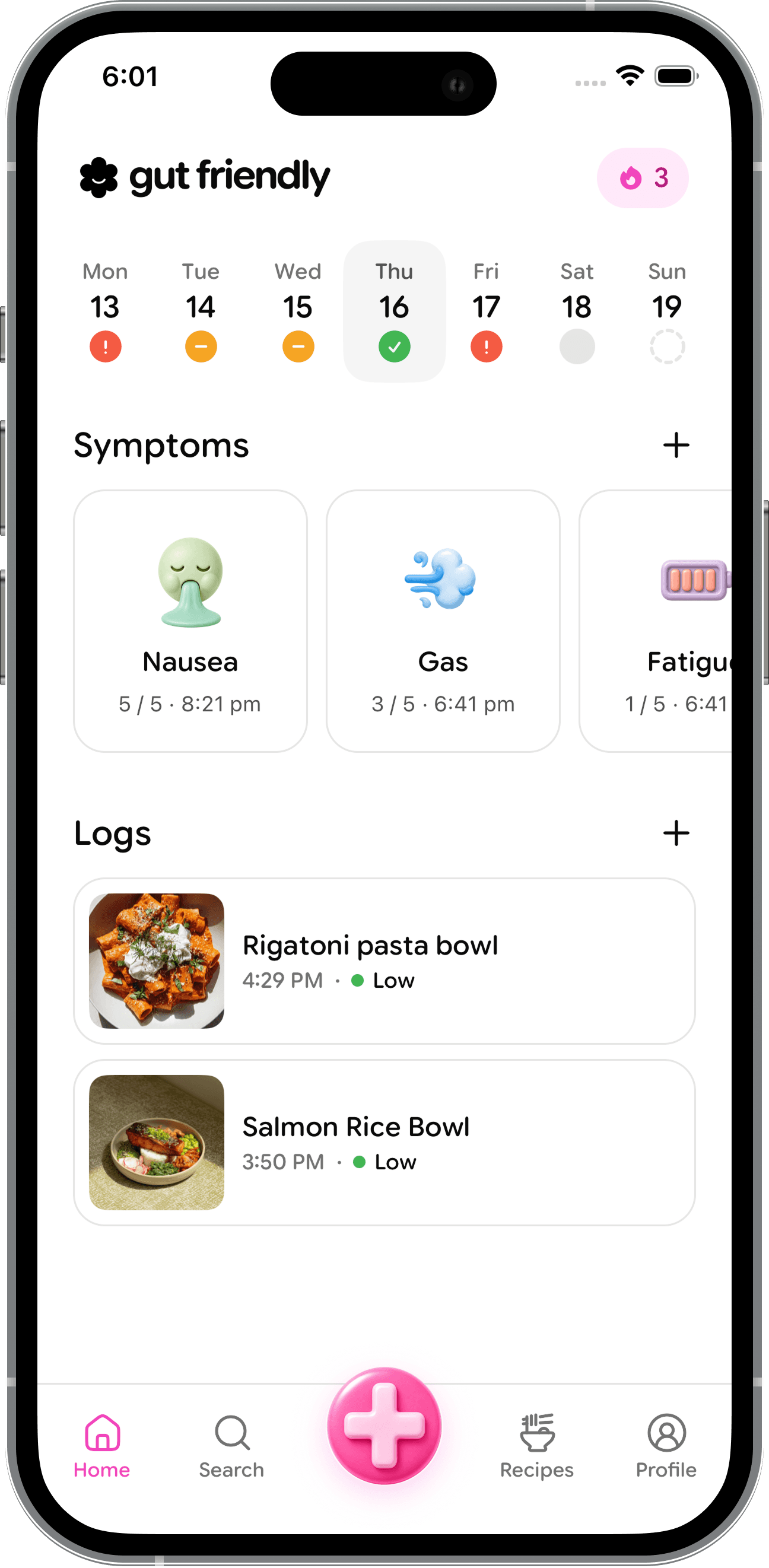
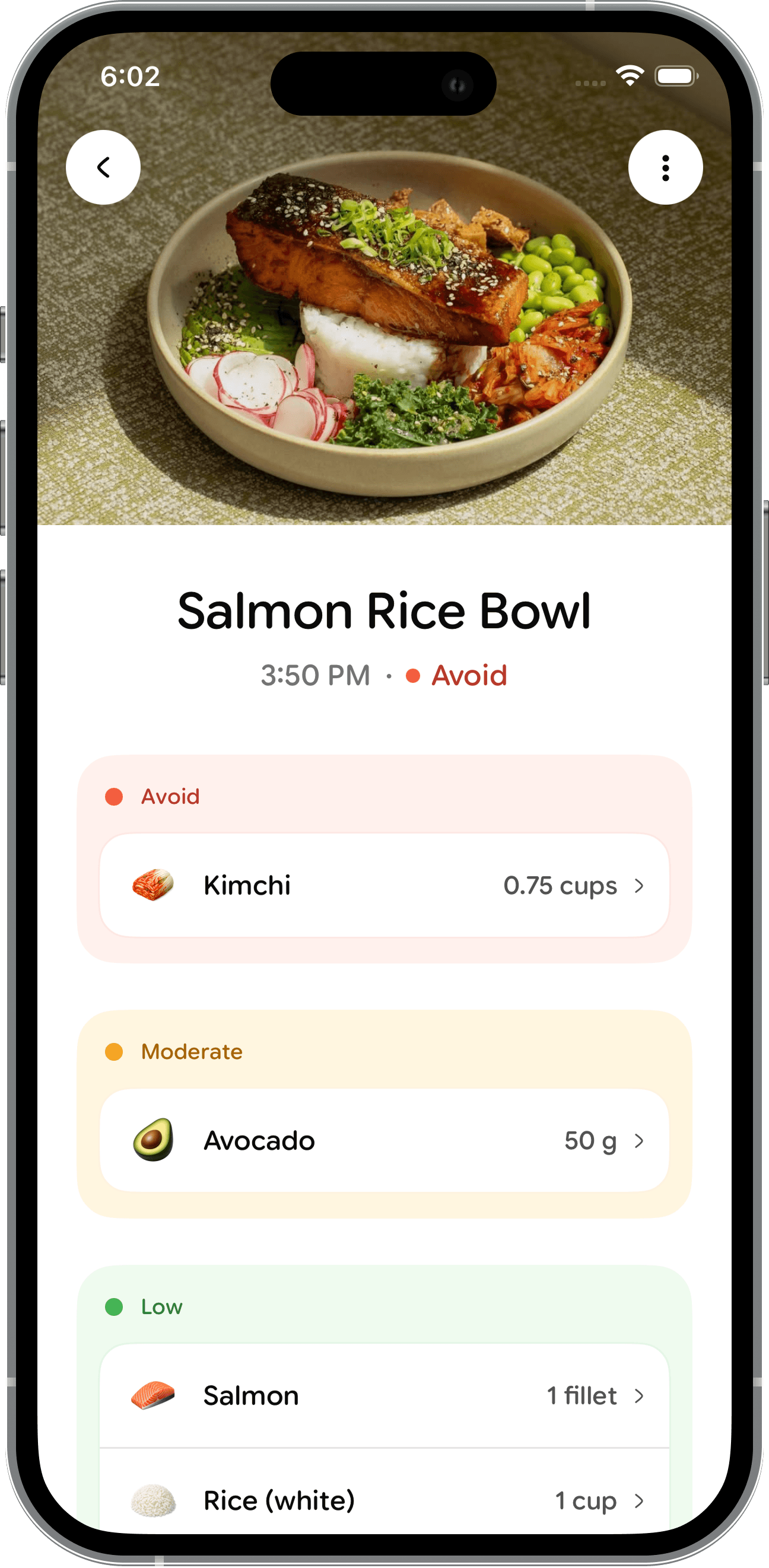
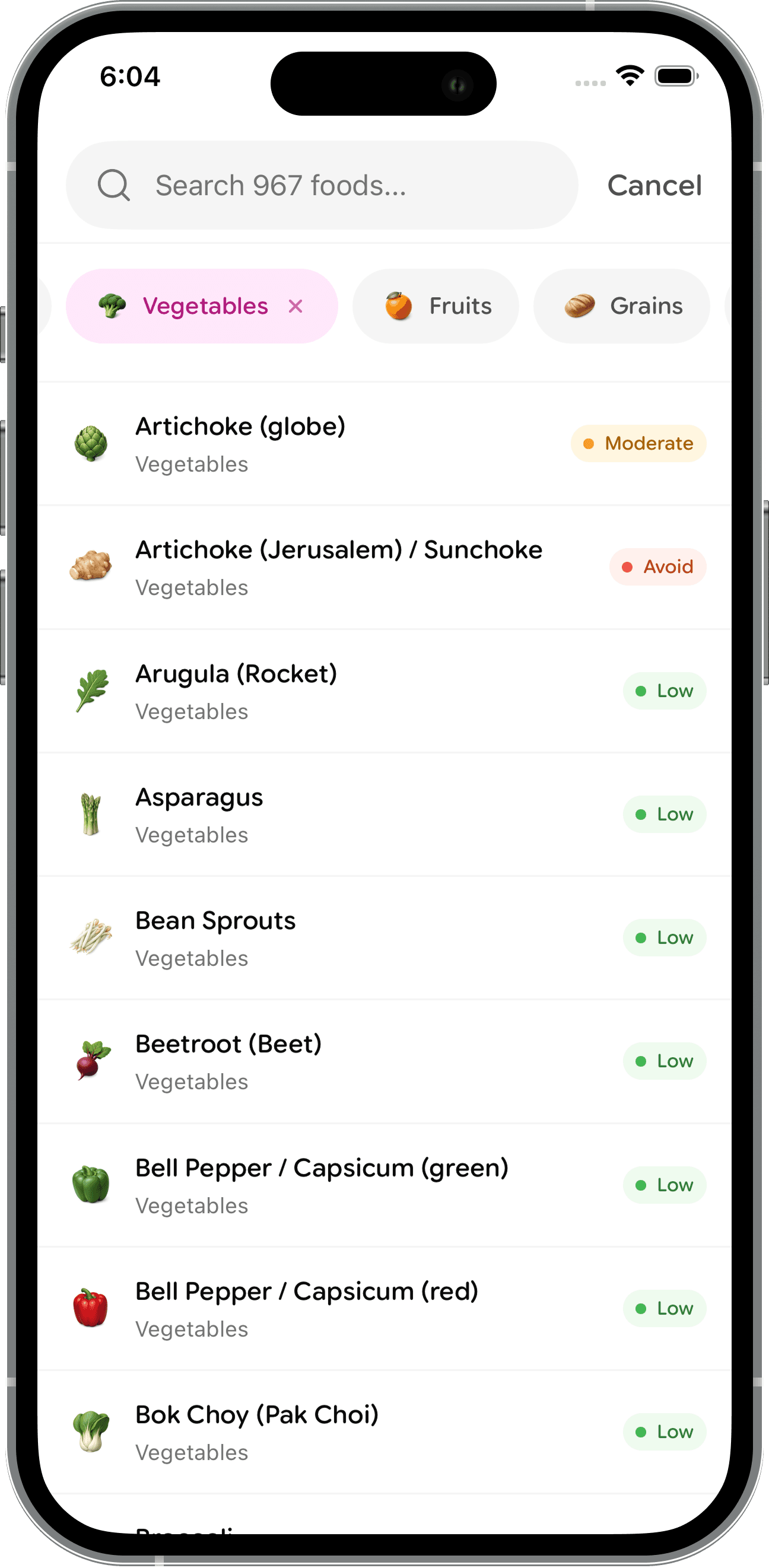
Check a whole plate in seconds.
Not sure about a whole meal? Scan it with the Gut Friendly app.
Get the app