
Walnuts
Nuts & Seeds · Tree Nuts
Yes. Ten walnut halves, about 30 g, are rated green, and there is very little in them to trip over: 0.05 g of GOS, 0.02 g of fructans, and zeros for lactose, fructose, sorbitol and mannitol. Walnuts are a cooking nut rather than a counting nut, which is why they end up carrying so much low FODMAP food: pesto, salads, porridge and half the baking tray.
Last updated 4 September 2026Serving sizes for walnuts
Ten walnut halves, about 30 g, are rated green. It is the only portion in the data, and it is a genuine handful.
Tested serving sizes
| Serving | Amount | Main FODMAP | Rating |
|---|---|---|---|
| 10 halves | 30 g | GOS 0.05 g |
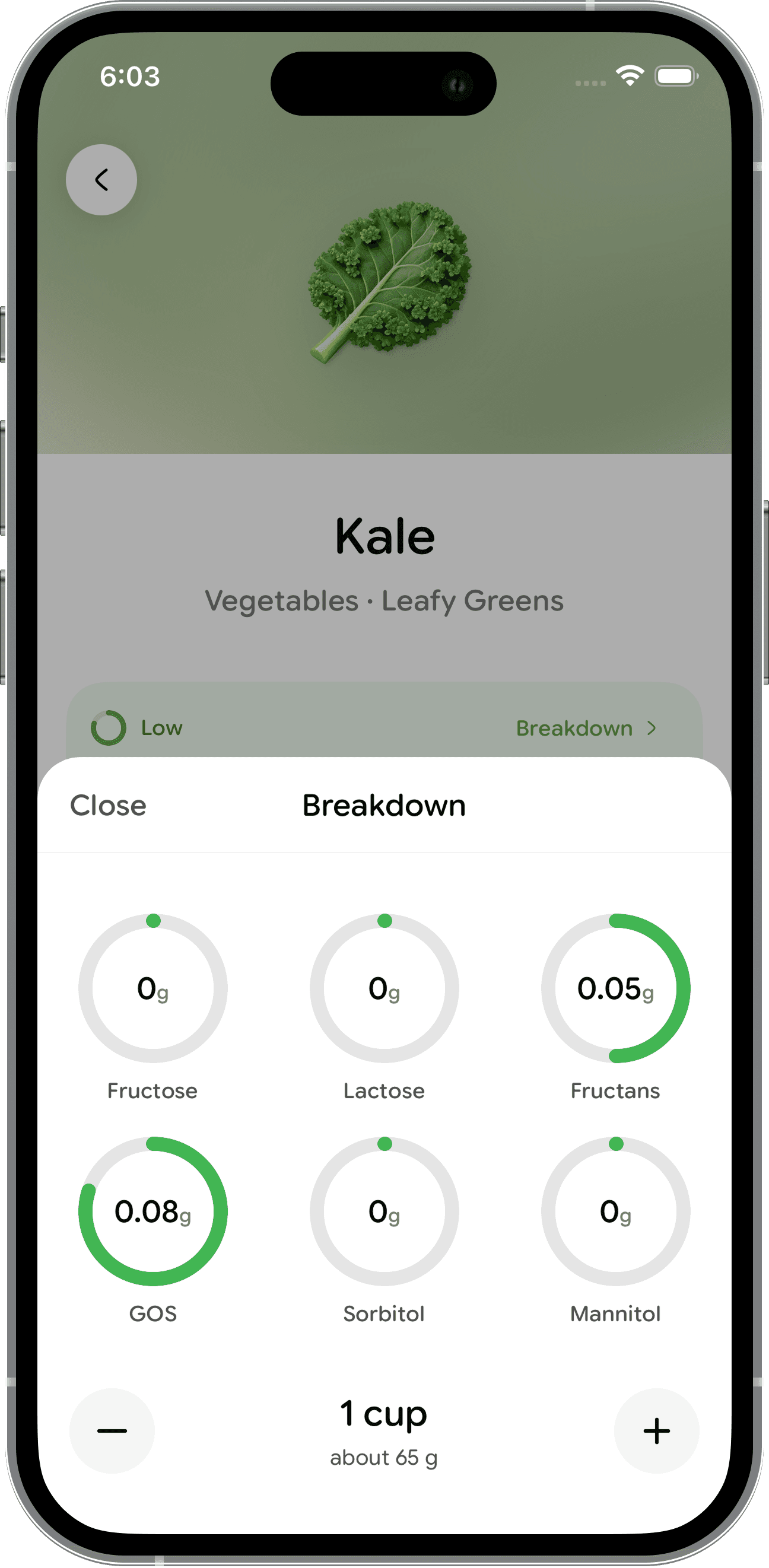
Breakdown for 30 g
Is walnuts low FODMAP?
Most of the nut aisle is limited by GOS, the fermentable chain that also sets portion sizes for legumes, and walnuts carry unusually little of it: 0.05 g in the tested handful, half the 0.1 g mark at which a portion starts to count as moderate. The fructans read 0.02 g, close to nothing. For scale, almonds reach 0.08 g of GOS in a 12 g serve, less than half the weight. One walnut portion has been tested, so 30 g is what the green rating covers, but it is a roomy figure to work inside.
Walnuts and IBS: what to know
Walnuts usually arrive chopped through something rather than eaten from a bowl, so the real dose is often well under the tested handful; a scatter over a salad for four is a few halves each. What deserves watching is the company they keep. In trail mix they sit beside cashews, which are amber at ten nuts and red at a 30 g handful, and in fruit loaves they come with dried fruit and wheat flour, both bringing fructans of their own. Walnuts are also very oily, and a large fatty snack can unsettle things with no FODMAP involved.
Gut-friendly ways to eat walnuts
Toast them first, always: eight minutes in a dry pan turns walnuts from bitter filler into the point of the dish. They blitz into a rougher, more savoury pesto than pine nuts give you, which suits roast vegetables and grain bowls better than delicate pasta. Chopped, they are the crunch on porridge, on roasted pumpkin, or through a leaf salad with feta and pear. In baking they spread across a whole tin, so a loaf or a tray of brownies puts only a few halves into each slice.
Frequently asked questions
How many walnuts can I eat with IBS?
Ten halves, about 30 g, is the green-rated portion and the only one in the data, so it works as both the tested serve and a sensible ceiling. That is a real handful rather than a token few. Eat considerably more in one sitting and you are past what has been measured, rather than into a known problem.
Are walnuts OK during the FODMAP elimination phase?
Yes, at the tested handful, and they earn their place precisely because they are not a snack food. A few chopped halves make a plain meal taste finished at a point when your seasoning options are thin. Buy them plain, though: candied and honey-roasted walnuts are coated in honey, rated red at its tested serve, and the coating is the part that would cause the trouble.
Is walnut bread or walnut cake low FODMAP?
The walnuts are rarely the issue, the flour is. One slice of wholemeal wheat bread is already amber on 0.22 g of fructans before a nut goes near it, so a walnut loaf inherits that rating rather than improving on it. A sourdough or gluten-free base with walnuts through it keeps the nut and drops most of the fructan load.
Can I eat walnuts every day with IBS?
Nothing in the data argues against a daily handful, but count in days rather than in snacks. GOS accumulates across everything you eat, so walnuts at lunch, a spoonful of almond butter at breakfast and a bowl of oats all add to one running total. If symptoms have started and walnuts are the new habit, pull them for a week and put them back on their own.
Check a whole plate in seconds.
Not sure about a whole meal? Scan it with the Gut Friendly app.
Get the app